
Flat roof repair in CA 95814
Quick Summary:
Flat Roof Repair in Sacramento: Stop Leaks Before They Spread
What’s Covered on This Page
- How to Tell Your Sacramento Flat Roof Needs Repair
- Common Flat Roof Repair Types Handled in Sacramento
- What the Flat Roof Repair Process Looks Like in Sacramento
- How Sacramento’s Climate Affects Flat Roof Repair Timing
- How to Keep Your Flat Roof in Good Shape After Repair
- How do I know if my flat roof needs repair or a full replacement?
- How does Sacramento’s heat affect flat roofs over time?
- Why does my ceiling stain keep coming back even after I patched the roof?
- How long does a flat roof repair take in Sacramento?
- Is standing water on my flat roof actually a problem if it drains within a day or two?
- Can I schedule a flat roof inspection without committing to a repair?
How to Tell Your Sacramento Flat Roof Needs Repair
Most people don’t climb up on their roof every weekend. So problems sneak up on you. By the time you notice something inside your building, the damage outside has been growing for weeks or even months.
Here’s what we hear from Sacramento property owners almost every single call. They spot a brown stain on the ceiling. Or they notice a soft, spongy spot when they walk across the roof to check their HVAC unit. Sometimes it’s a musty smell in a back room that won’t go away no matter what they try. These are all signs your flat roof is telling you something.
Start with what you can see from the ground. Look for areas where the roofing membrane is bubbling, cracking, or pulling away from edges and seams. Pooling water is a big one. If you see standing water 48 hours after rain, that’s not normal. Sacramento’s clay soil causes subtle foundation shifts in neighborhoods like Land Park and Curtis Park, and those shifts stress your roof deck. Seams open up. Flashing lifts. Water finds a way in.
The leak usually isn’t directly above the stain you see inside. Water travels along the roof deck before it drops through. That’s why pinpointing the actual entry point matters so much. A quick visual check won’t cut it.
Other warning signs are easier to miss. Granule loss on modified bitumen surfaces. Small tears near penetrations like pipes or vents. Flashing that’s rusted or bent away from parapet walls. And if your energy bills have crept up for no clear reason, saturated insulation beneath the membrane could be the culprit.
Don’t wait for a major storm to find out your roof has a problem. If you’re seeing any of these signs around your Sacramento property, it’s worth getting a professional set of eyes up there. Give us a call and we’ll take a look before a small issue turns into a costly one.
Common Flat Roof Repair Types Handled in Sacramento
Not every flat roof problem looks the same. But after years of climbing onto commercial buildings and older homes across Sacramento, we’ve seen the same handful of issues come up again and again.
Ponding water is the one we deal with most. Flat roofs don’t drain like pitched roofs do. Water sits. It pools. And if your roof has even a slight dip or a clogged drain, that standing water starts breaking down the membrane underneath. We see this constantly on buildings near Midtown where older structures have settled over the decades. Left alone for a few weeks, ponding water can turn a small soft spot into a full leak.
Membrane tears and punctures are right behind ponding on the list. Maybe an HVAC tech stepped on something sharp. Maybe a tree branch came down during a storm. Whatever caused it, even a tiny tear lets moisture creep in. Most building owners don’t notice until there’s a water stain on the ceiling. By then the underlayment is already soaked.
Then there’s seam separation. The seams where roofing material overlaps are always the weak link. Sacramento’s heat causes materials to expand and contract all summer long. Over time, adhesive fails and seams pull apart. We find this especially on flat roofs that haven’t been inspected in a few years.
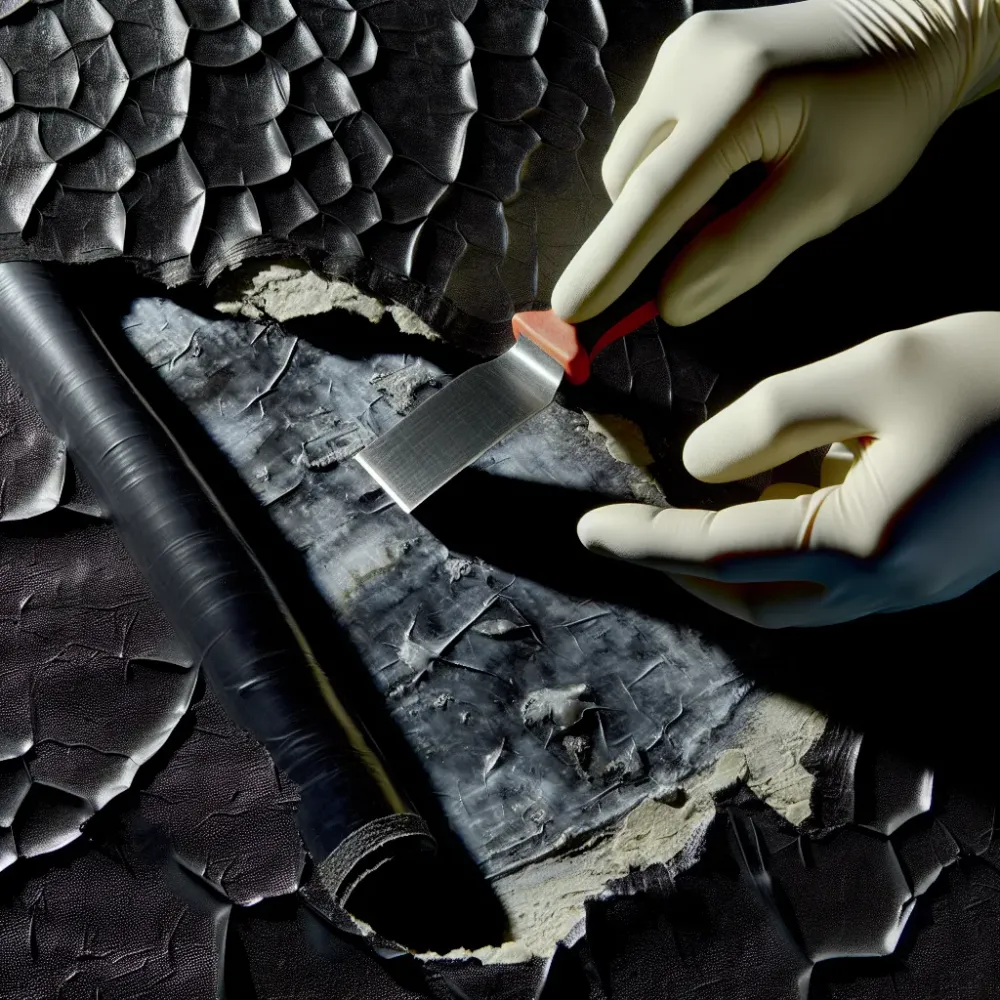
Flashing failures around vents, pipes, and edges cause more leaks than most people realize. The metal or rubber flashing that seals those transitions gets brittle in our dry climate. Once it cracks or lifts, water follows gravity right into your building.
We also handle blistering and bubbling, where trapped moisture or air pushes up under the roof surface. You might walk across your roof and feel a soft, spongy area. That’s a blister. It needs attention before it ruptures and exposes the layers below.
Not sure which of these sounds like your situation? That’s actually pretty common. Most folks just know something’s leaking. Give us a call and we’ll figure out exactly what’s going on up there.
What the Flat Roof Repair Process Looks Like in Sacramento
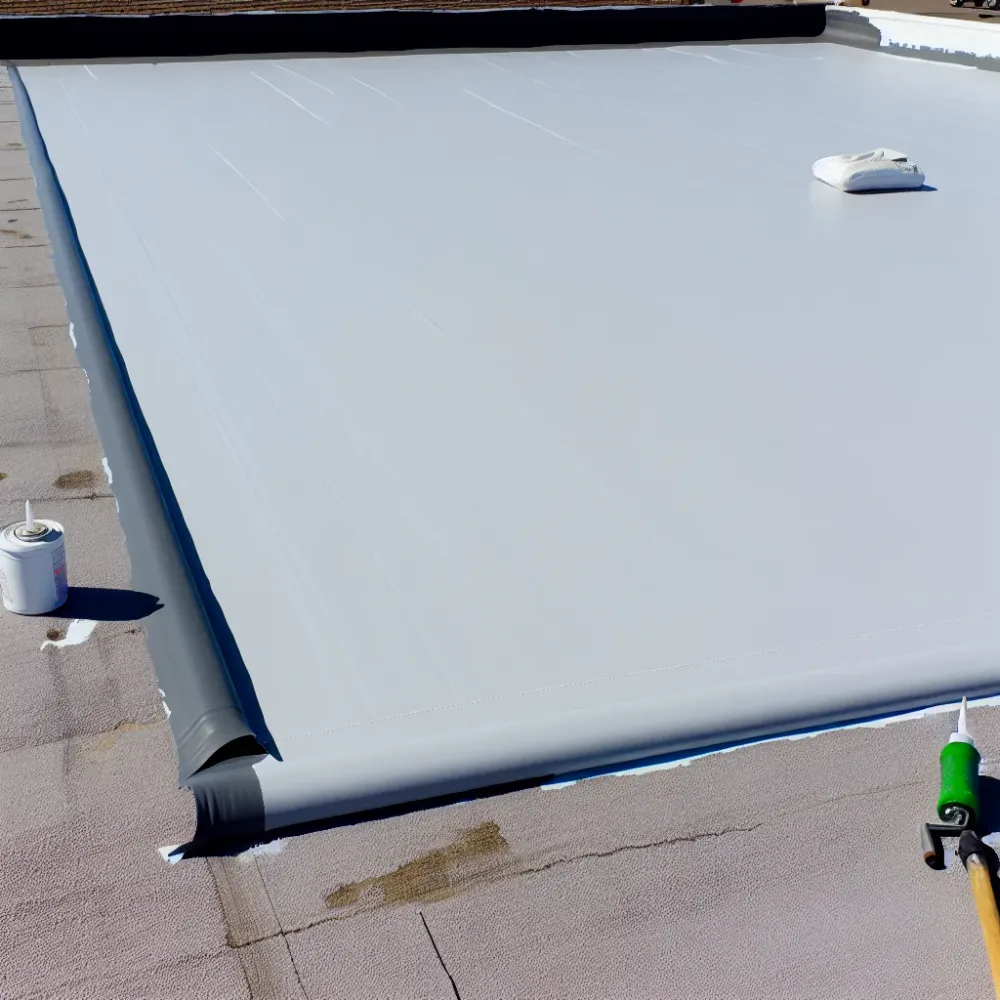
So what actually happens when we show up? Here’s the honest rundown.
First, we get on the roof and do a full inspection. We’re checking every square foot. The membrane, the flashing around edges, any penetrations like vents or HVAC units, and the overall drainage situation. We use moisture detection tools to find trapped water you can’t see from the surface. In most cases, the damage goes beyond that one spot you noticed leaking inside.
Once what we’re dealing with, we’ll walk you through exactly what needs to happen. No mystery. No jargon. Just a clear explanation of what’s wrong and how we fix it. If it’s a small puncture or a failed seam, we can often handle it the same day. Larger sections of deteriorated membrane or structural damage to the decking underneath take a bit more planning.
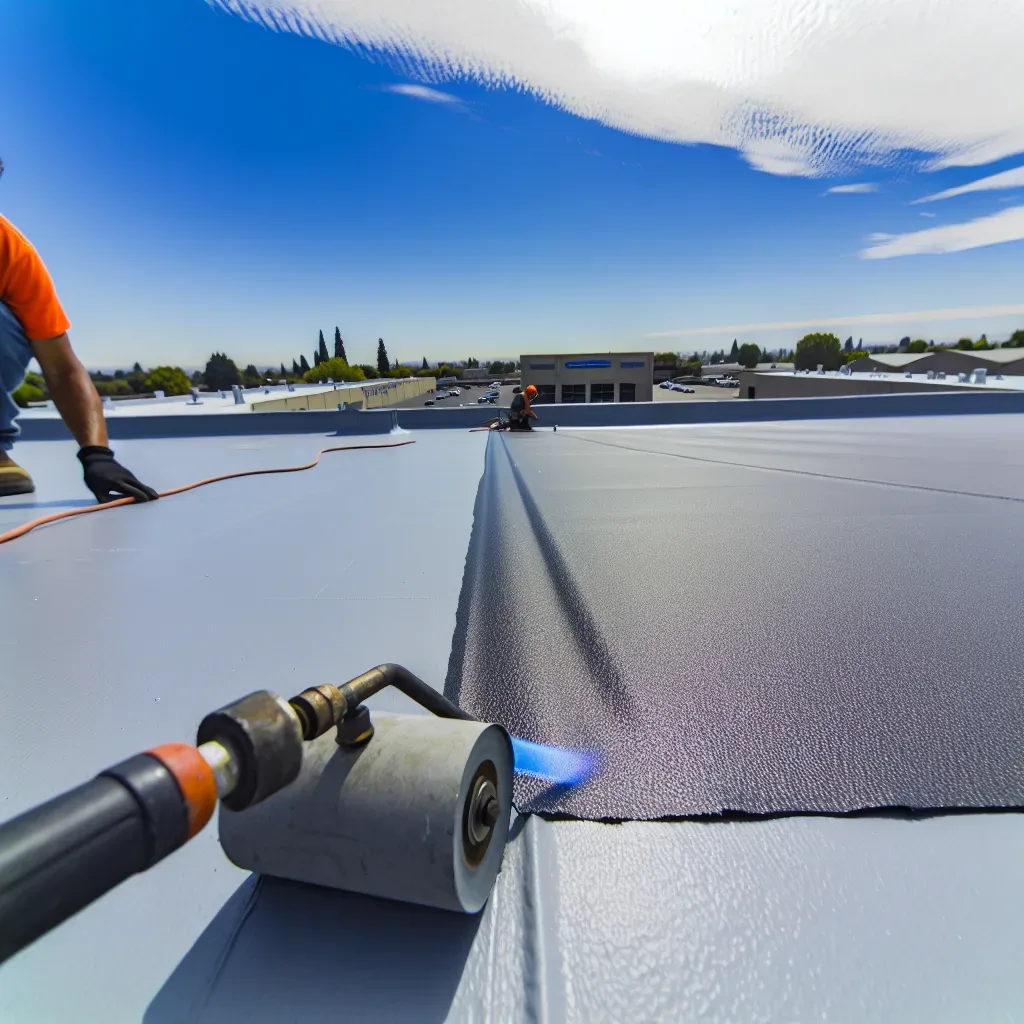
The actual repair depends on your roof system. For a modified bitumen roof, we’ll cut out the damaged section, prep the surface, and torch-apply or adhesive-bond a new patch that overlaps the existing material. For TPO or EPDM, we clean the area thoroughly and use heat welding or seam tape rated for your specific membrane. Every material has its own process, and getting it wrong means the repair won’t last. We’ve seen plenty of DIY patches done with roofing cement that failed within a year.
After the repair is finished, we test it. We flood-test smaller areas or run water across repaired seams to make sure everything sheds properly. Sacramento homes near Land Park and Pocket-Greenhaven deal with standing water issues constantly because of older drainage designs. We won’t leave until water moves the way it should.
The whole process is straightforward. But every step matters. Skip the moisture scan and you patch over rot. Rush the surface prep and the bond fails by next summer. We do this work across Sacramento every week, and we treat each roof like it’s our own. Want to get the process started? Give us a call and we’ll set up your inspection.
Need help with flat roof repair?
Call now for a free estimate. Prime Sac Roofs is ready to help.
How Sacramento’s Climate Affects Flat Roof Repair Timing
Sacramento doesn’t go easy on flat roofs. Our hot, dry summers push surface temperatures well above 150 degrees on exposed membrane materials. Then winter rolls in with weeks of steady rain. That cycle of extreme heat and heavy moisture is exactly what causes flat roof materials to expand, contract, crack, and eventually fail.
We see the pattern every year without exception.
From June through September, UV exposure breaks down the oils in asphalt-based roofing and degrades single-ply membranes. You might not notice anything from the ground. But up on the roof, the surface is drying out, becoming brittle, and developing micro-cracks. By the time October hits, those tiny cracks are wide open invitations for the first rains. Neighborhoods like Land Park and Curtis Park have older commercial buildings with flat roofs that have been baking in this heat for decades. The damage compounds year after year if nobody catches it.
Then there’s the rain. Sacramento averages around 20 inches of rainfall annually, and most of it lands between November and March. Flat roofs don’t shed water the way pitched roofs do. They rely on slight slopes and functioning drains to move water off. So when leaves and debris clog those drains during fall, you’ve got standing water sitting on already weakened material. That’s called ponding, and according to the National Roofing Contractors Association, ponding water is one of the leading causes of premature flat roof failure. Understanding how building materials respond to heat and moisture cycles helps explain why Sacramento’s climate creates such consistent stress on flat roof systems.
Timing your repair matters more than most people realize. The sweet spot in Sacramento is late spring or early fall. You want dry conditions for proper adhesion of patches and coatings, but you don’t want the brutal July heat making materials too soft to work with. We schedule most of our bigger flat roof jobs in April, May, or October for exactly this reason.
Not sure if your roof made it through last winter? That’s actually pretty common. Most leaks from winter rain don’t show up inside until weeks later. If you’ve noticed water stains on a ceiling or a musty smell in a back room, don’t wait for the next storm to confirm it. Give us a call and we’ll get up there while conditions are still ideal for a lasting repair.
Watch Our Video
See How We Handle Flat roof repair in CA 95814
Prime Sac Roofs — Serving CA 95814 and surrounding areas
How to Keep Your Flat Roof in Good Shape After Repair
The repair is done. Now what? This is the part most people skip, and it’s exactly why we end up back on the same roof a year later.
Your flat roof needs regular attention. Not a lot. But consistent. We tell every customer in Sacramento the same thing: check your roof twice a year, minimum. Once before the rainy season hits and once after. That’s it. Two quick inspections can save you thousands down the road. If you’re near Land Park or the Sacramento River, where tree cover is heavy, bump that up to three times a year. Leaves and debris pile up fast, and they trap moisture right against your membrane.
Keep your drains clear. Seriously, this one matters more than anything else on this list. A clogged drain on a flat roof means standing water. Standing water means your repair won’t last. Walk up there or have someone do it for you. Pull out the leaves, check that water flows freely toward every drain opening. We see perfectly good repairs fail because nobody cleaned a drain for eight months.
Watch for small stuff. A tiny blister in the membrane. A seam that looks like it’s lifting at the edge. A soft spot when you step. These aren’t emergencies yet. But they will be if you ignore them through a full Sacramento summer and the wet season that follows. Catching problems early is the whole game.
Trim back any branches hanging over your roof. They scratch the surface, drop debris, and give critters a bridge straight to your building. We’ve pulled apart damage in Midtown caused by nothing more than a neglected oak branch rubbing the same spot for months.
And don’t put off scheduling a professional inspection every couple of years. We’re licensed contractors who know exactly what to look for. Things you can’t spot from a ladder, we catch in minutes. Flashing separations, UV damage on coatings, subtle slope changes from settling. A quick pro visit keeps your roof honest.
You just invested in a real repair. Protect that investment. If you want us to set up a maintenance schedule or just come take a look, give us a call. We’re happy to help Sacramento property owners stay ahead of trouble instead of chasing it.
Frequently Asked Questions
Common questions about flat roof repair services in CA 95814
How do I know if my flat roof needs repair or a full replacement?
If the damage is limited to one or two spots, repair is usually the right call. We look at how much of the membrane is still solid, how old the roof is, and whether water has soaked into the decking underneath. A roof with widespread soft spots, multiple failing seams, or rotted decking usually needs more than a patch. We’ll tell you honestly what we find up there.
How does Sacramento’s heat affect flat roofs over time?
Sacramento summers are tough on flat roofs. The heat causes roofing materials to expand and contract every single day. Over time, that movement pulls seams apart and makes flashing brittle. Modified bitumen and TPO membranes take the hardest hit. If your roof hasn’t been checked in a few years, the seams are probably showing wear you can’t see from the ground. We catch this early before it turns into a leak.
Why does my ceiling stain keep coming back even after I patched the roof?
The patch probably missed the real entry point. Water on a flat roof travels sideways along the deck before it drops through your ceiling. So the stain inside is almost never directly below the leak. We use moisture detection tools to trace water back to where it actually got in. Without that step, you’re guessing — and the stain comes back every time it rains.
How long does a flat roof repair take in Sacramento?
Most repairs we handle in Sacramento take one day or less. A small puncture or failed seam can often be fixed the same day we inspect it. Larger areas with membrane damage or wet decking take a bit more time because we have to let surfaces dry and prep them properly. Rushing the prep is how repairs fail early. We’ll give you a clear timeline before we start any work.
Is standing water on my flat roof actually a problem if it drains within a day or two?
Water that drains within 24 to 48 hours is normal. Water still sitting after 48 hours is a problem. Ponding water breaks down your membrane faster than almost anything else. We see this a lot on older Sacramento buildings in areas like Midtown, where roofs have settled slightly over the decades. Even a small low spot can hold enough water to cause serious damage over one rainy season.
Can I schedule a flat roof inspection without committing to a repair?
Yes, absolutely. We come out, get on the roof, and tell you exactly what we find. You decide what to do from there. Most Sacramento property owners just want to know what they’re dealing with before making any decisions. We’ll walk you through what we see in plain language. No pressure, no confusing reports. Just an honest look at your roof so you can make the right call for your building.
Ready to Get Started?
Call now for a free estimate Call +19164148398 today.
